When I was working in the field as a paramedic, one of the most frustrating moments wasn’t during patient care — it was arriving at the hospital unsure if the right team had been activated.
You give a report. You transmit the EKG. You paint the picture of your patient. You announce your ETA. And then you hope the message landed.
Pre-hospital alerts are meant to prepare the hospital before the ambulance doors open. But if the process relies on disconnected tools, manual relay, or unclear acknowledgement, delays happen — and those delays matter.
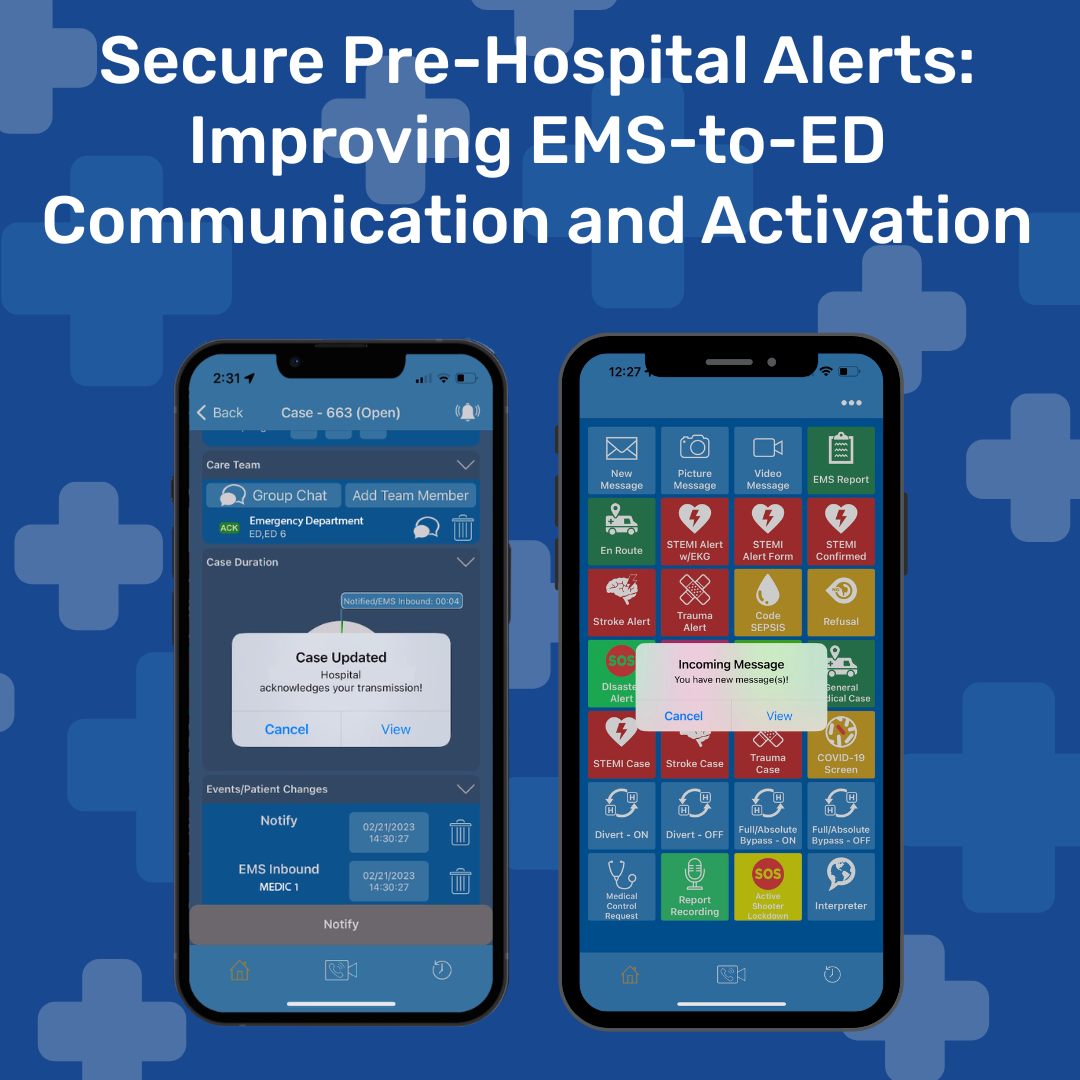
Secure, structured pre-hospital alert workflows help ensure EMS communication translates into immediate action inside the hospital.
Why Secure Pre-Hospital Alerts Matter
Pre-hospital alerts typically include:
- Chief complaint and severity
- Vitals and trends
- 12-lead EKG data (if needed)
- Interventions performed
- Estimated time of arrival (ETA)
From the field perspective, the goal is simple: give the hospital enough information to prepare.
But when communication flows through multiple systems, radios, phone calls, text messages, separate EKG portals, it creates gaps. Not because teams aren’t trying, but because the workflow isn’t streamlined.
Secure alert solutions centralize:
- EMS radio and phone communications
- EKG transmission
- Team notifications
- Pre-arrival visibility
- Pictures and patient attachments
This reduces missed information and improves traceability.
What Modern Pre-Hospital Alert Solutions Should Support
Centralized EMS Communication
Incoming EMS radio and phone communications should be handled in one system, with call answering, recording, and replay capabilities. Supporting multiple operator positions improves reliability and reduces missed calls.
From an EMS standpoint, knowing the call was clearly received and documented builds confidence in the handoff.
Real-Time Pre-Arrival Visibility
Hospitals should have a shared dashboard view of inbound patients, including chief complaint, severity, ETA, and bed status.
One of my main configuration requests for GD Customers is creating their ED Dashboard that showcases this view of inbound patients and let’s them assign beds, prepare teams, and coordinate care before arrival.
Configurable Acute Care Workflows
Every region operates differently. A Stroke Team activation in one hospital can look very different in another.
Configurable intake forms and acute care workflows allow teams to capture the data that matters for their protocols without adding unnecessary steps. This flexibility is especially important when working with multiple EMS agencies that may transmit information differently.
Closed-Loop Notification
Push alerts with acknowledgement tracking ensure the right teams are notified and confirm receipt. Escalation pathways reduce uncertainty when time is critical.
Flexible EKG Management
Prehospital 12-leads should be consolidated in one location and support multiple transmission methods. Open architecture improves interoperability across EMS partners.
That flexibility matters when agencies across a region use different monitors, platforms, and workflows.
Secure Multimedia and Collaboration
The ability to securely share EKGs, monitor data, attachments, and voice/video communication strengthens real-time decision-making without fragmenting communication.
Risks of Informal Alert Processes
Hospitals that rely on:
- Manual call trees
- Personal text messaging
- Pager systems without confirmation
- Separate tools for EKGs and activation
often experience:
- Missed acknowledgements
- Delayed mobilization
- Documentation gaps
- Inconsistent escalation
These risks increase during shift changes and peak census hours.
Operational Benefits Beyond Security
Secure, centralized pre-hospital alert solutions improve more than compliance.
Hospitals often see improvements in:
- Faster team activation
- Reduced duplication of communication
- Better EMS-to-ED coordination
- Improved door-to-intervention intervals
- More reliable reporting through integrated intelligence platforms
From both the EMS and hospital perspective, the goal is alignment. When communication is centralized, configurable, and acknowledged, preparation starts earlier and handoffs become smoother.
Strong pre-hospital alert systems support both clinical performance and operational consistency without adding communication noise. And saving lives.
About GD [General Devices]
GD is a HealthTech company specializing in communication solutions that help EMS and hospitals deliver simply seamless patient care. Powered by responsive innovation, GD’s user-friendly solutions facilitate rapid, secure, voice, telehealth and data sharing communications across care teams to help save time, money and lives. Backed by a 40+ year history and thousands of implementations, GD is an experienced industry leader. Visit https://general-devices.com/ to learn more.
Media Contact
Alessia Ambrosino
201-313-7075
.png?width=100&height=100&name=Mitchell%20Scott%20Profile%20Image%20(1).png)