The case starts before the ambulance arrives
When the ambulance bay doors swing open, the emergency department should already know who is coming through them. That knowledge comes from EMS pre-arrival notification.
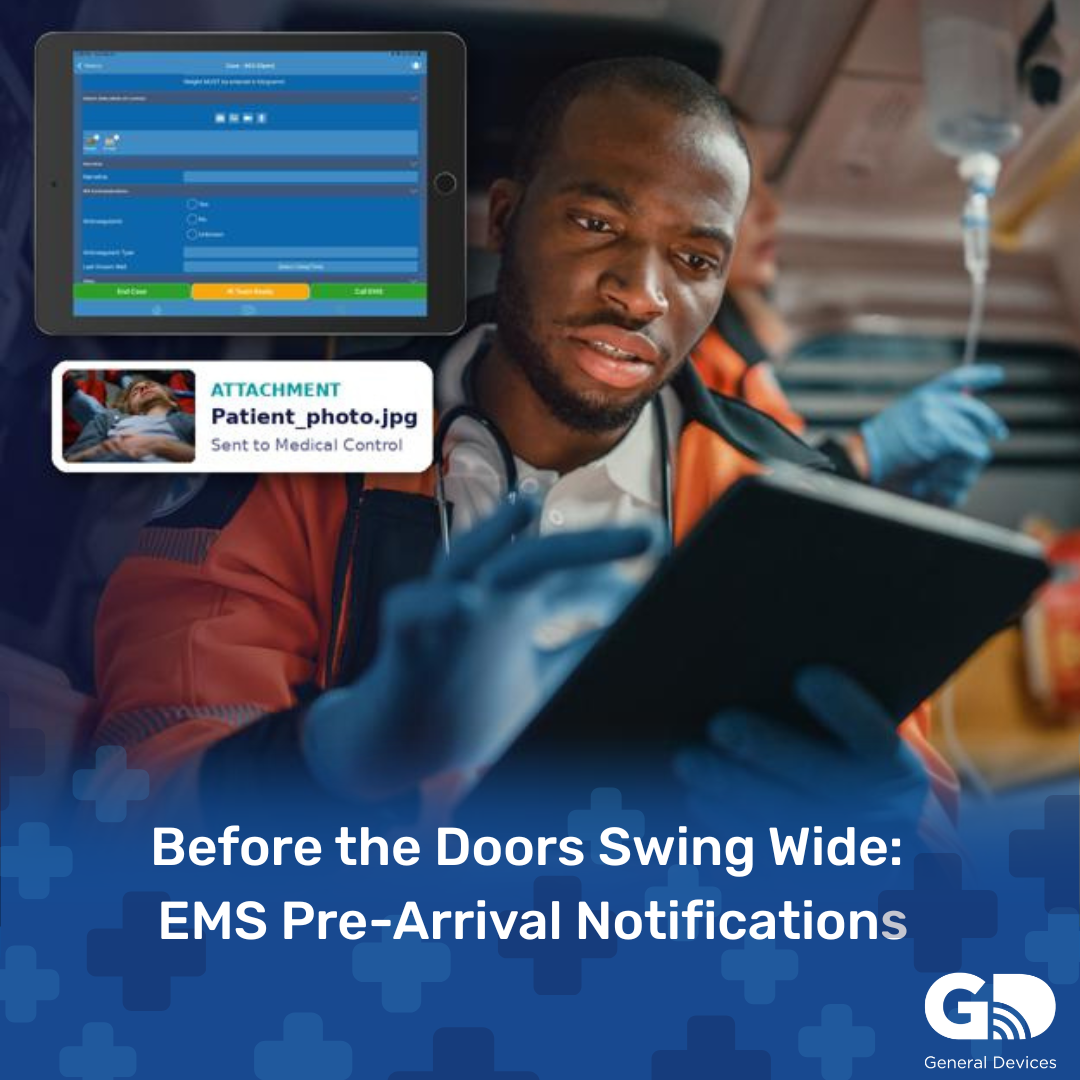
EMS pre-arrival notification is the information EMS crews send to the receiving hospital before a patient arrives. It typically includes the patient's condition, vital signs, a 12-lead ECG when relevant, and the estimated time of arrival. With it, the ED can prepare a room, alert specialists, and be ready to treat on arrival.
To see why it matters, let's follow one case from the field to the bay doors.
One case, from the field to the bay doors
This is an illustrative example of a suspected STEMI, the kind of case where pre-arrival notification matters most.
- First contact. A paramedic crew reaches a 58-year-old man with crushing chest pain. They start an assessment and capture a 12-lead ECG.
- The 12-lead is sent. The EKG shows signs of a STEMI. Through 12-lead EKG transmission, the crew sends it straight to the receiving hospital. The ED now knows what kind of patient is coming.
- The alert goes out. The crew sends a prehospital alert with vitals, history, and an ETA. An ED physician reviews the EKG while the ambulance is still on the road.
- The team activates. The physician activates the cardiac cath lab team. Staff are called in and the lab is prepared before the patient arrives. In some cases, prehospital alerts from EMS can skip the ED physician and send alerts straight to specialty care teams.
- Updates en route. The crew shares real-time updates as the patient's condition changes. The ED team is tracking the patient's status, not waiting for a radio call.
- The doors swing wide. The ambulance arrives and the team is ready. The patient can move toward the cath lab without restarting the story from scratch.
Without pre-arrival notification, steps 2 through 4 would wait until the patient was already in the bay. Every one of those minutes would be added to the patient's time to treatment.
What strong prehospital alerts include
Not all pre-arrival notifications are equal. A quick radio call gives the ED a heads-up, but it can leave out details or get lost in a busy department. Strong EMS to hospital communication gives the receiving team:
- The patient's condition and vitals, in writing, so nothing depends on memory.
- A 12-lead EKG, sent digitally so a physician can read it before arrival.
- An accurate ETA, updated as the crew gets closer.
- A clear alert type, such as STEMI, stroke, or trauma, so the right team is activated.
- One shared record, so everyone from the ED to specialty teams sees the same information.
When this data travels together, the ED doesn't have to piece it together from separate calls, faxes, and pages.
How e-Bridge connects EMS communication to the hospital
e-Bridge Communication Platform, part of the GD Solution Suite, gives EMS crews and hospital teams one secure place to share a case. Crews send prehospital alerts, real-time messaging, and 12-lead ECGs, and the full care team sees them together.
Key e-Bridge features that support pre-arrival notification include:
- Push Alerts and Notifications send real-time alerts to predetermined teams for prompt action.
- EKG Management sends 12-leads through streamed monitor data or attachments.
- Live GPS ETA tracks incoming EMS automatically for an accurate arrival time.
- Notification Acknowledgement shows who has seen each alert.
- Chat Messaging lets EMS and every care team talk in one group thread.
- Configurable Acute Care Workflows and smart templates for programs like STEMI mean hospitals don't build every workflow from scratch.
Once the patient arrives, the case moves into the ED. There, CAREpoint ED Workstation brings it together with the department's other communication tools.
Get ready before the doors open
The best emergency responses start before the patient arrives. EMS pre-arrival notification turns drive time into preparation time, so the ED is ready when the doors swing wide. Find your Regional Manager to schedule a one-on-one demonstration.
About GD [General Devices]
GD is a HealthTech company specializing in communication solutions that help EMS and hospitals deliver simply seamless patient care. Powered by responsive innovation, GD’s user-friendly solutions facilitate rapid, secure, voice, telehealth and data sharing communications across care teams to help save time, money and lives. Backed by a 40+ year history and thousands of implementations, GD is an experienced industry leader. Visit https://general-devices.com/ to learn more.
Media Contact
Alessia Ambrosino
201-313-7075